
-

The Modern KM and Innovation Function
Law firms are investing more in legal technology than ever before - and most are not seeing the returns they expected. The problem is rarely the tool. It is what sits underneath it.
This report is your practical guide to building the KM and innovation function your firm actually needs. Packed with research-backed insights, hiring frameworks, and a self-assessment tool, it covers why knowledge management has become the foundation for successful legal tech adoption, the four structural layers every high-performing KM function requires, role-by-role hiring guidance, and a diagnostic to identify whether your firm is underbuilt, overextended, or ready to scale.
Whether you are building a KM function from scratch or trying to understand why your technology investments are underperforming, this report will give you a clearer picture of what needs to change.
-
The Business Development Function of the Future
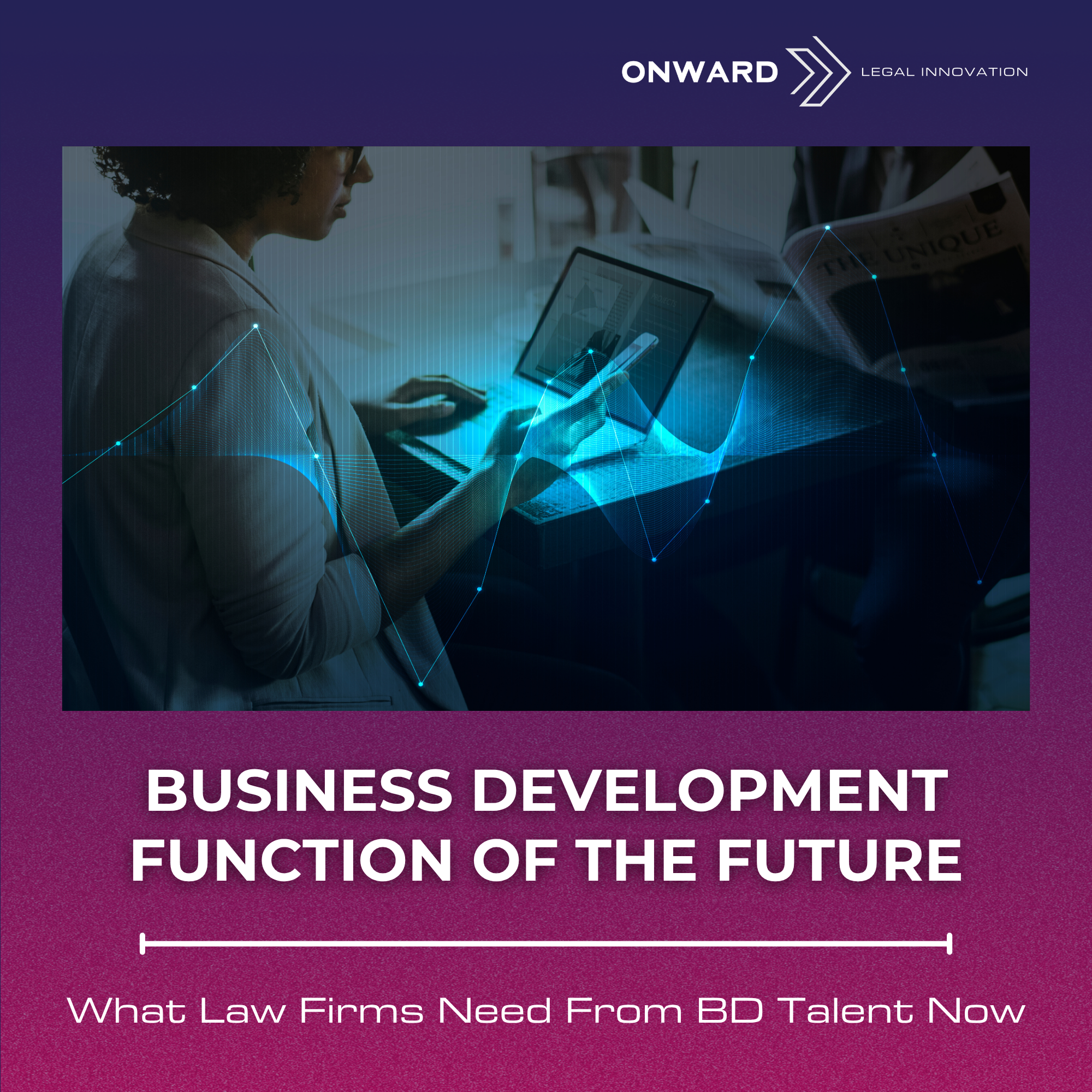
Law firms are spending more on lateral talent than at any point in recent history. What separates the firms that capture value from that investment from the ones that don't is often the BD function sitting behind it.
This report is your practical guide to building the BD function your firm actually needs. Drawing on data from NALP, the Thomson Reuters Institute, the Legal Marketing Association, and the Citi Hildebrandt Client Advisory, it covers why BD has shifted from a support function to a strategic growth driver, a role-by-role breakdown of every position in a high-performing BD team, the six criteria that matter most when evaluating BD candidates, and the structural questions every firm should be able to answer before going to market.
Whether your firm is building a BD function from the ground up, replacing senior leadership after C-suite turnover, or trying to understand why experienced BD hires keep leaving, this report will give you a clearer picture of what the strongest BD functions have in common and what yours may be missing.
-

Hiring for Legal Tech & AI Transformation
Sixty-nine percent of legal professionals are now using generative AI for work. More than half of their firms have given them no training to do it safely. Forty-three percent have no formal AI policy in place at all.
The firms pulling ahead are not the ones with the most tools. They are the ones who have hired people who can make those tools actually work, connecting AI to real legal workflows, building the knowledge infrastructure underneath it, and driving adoption in an environment that does not change easily.
This guide covers the roles law firms are hiring for right now, why the standard search process consistently fails in this market, what the strongest legal tech candidates are actually assessing before they say yes, and what it takes to find and keep them.
The gap between experimentation and execution is a talent problem. This guide is about how to solve it.
-

Hiring for Business Development & Growth
Most law firms have invested in BD. They have the headcount, the budget, the technology. And they are still having the same conversations about why growth is not happening the way leadership expected.
This guide looks at why that gap exists and what it actually takes to close it. It covers the four BD and marketing roles that move the needle most, why the strongest candidates in this market are not responding to job postings, what good hiring looks like in practice, and how the compensation conversation has changed now that law firms are competing against the Big Four, legal tech companies, and professional services firms for the same talent.
If your firm is planning a BD or marketing hire in 2026, this is where to start.
-
From Pilot to Practice
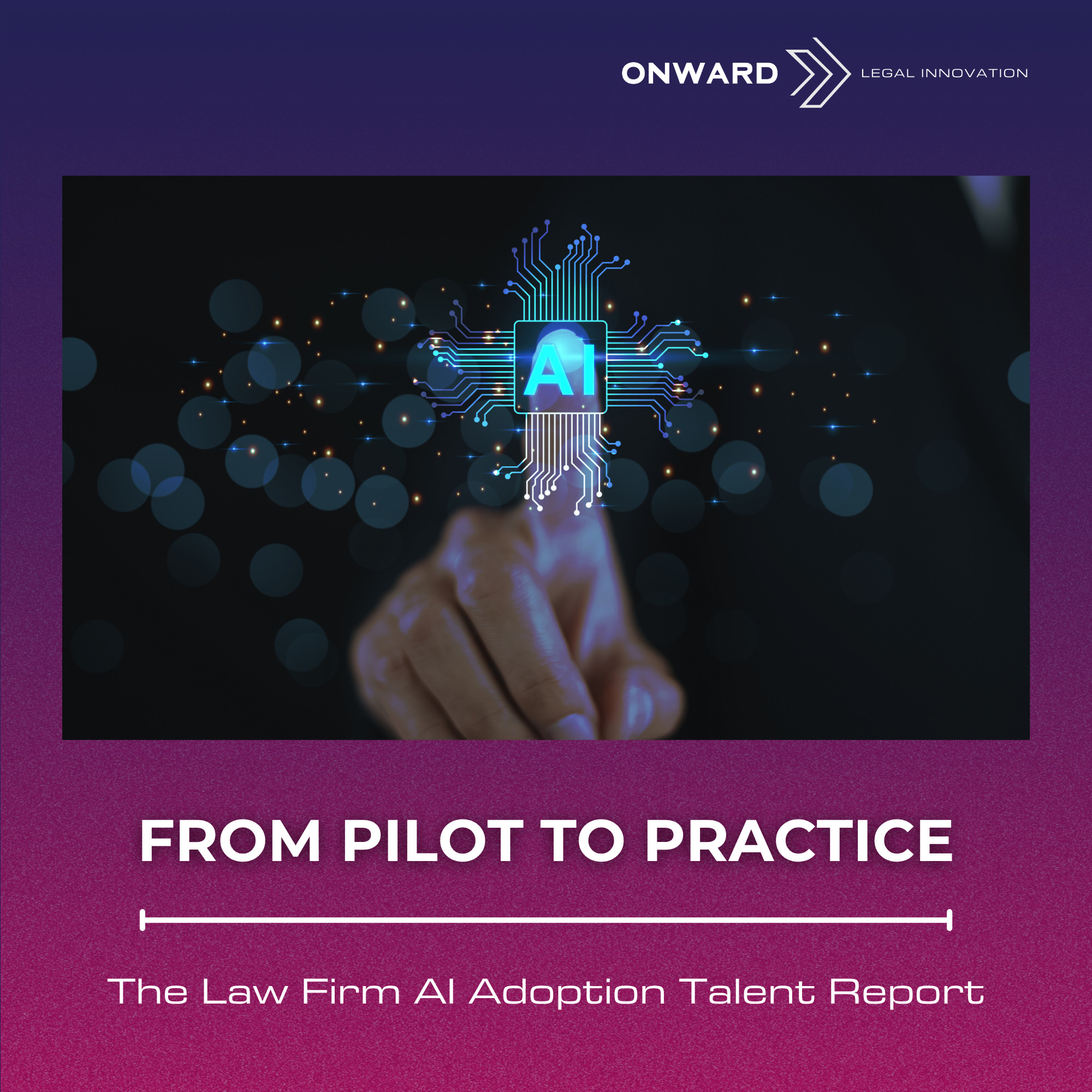
The pilot phase is over. Organization-wide AI usage in law firms nearly doubled in a single year, and attorneys are already using tools with or without firm approval. The question is no longer whether to adopt. It is whether the firm is organized to manage what adoption actually requires.
This report covers why moving from pilot to practice is a talent and organizational design decision more than a technology decision, the five requirements every firm needs in place simultaneously, the seven roles that sit at the core of a functional AI adoption program, where those roles should sit in the organizational structure, and what firms consistently get wrong when they hire for AI capability without solving the structural questions first.
If your firm is building or rebuilding its AI adoption function, this is where to start.
Resources and Hiring Guides for Law Firms — Onward Legal Innovation
Onward Legal Innovation publishes research-backed hiring guides and reports for law firm leaders building innovation, business development, and legal technology functions. All resources are free to download.
The Modern KM and Innovation Function
A practical guide to building the knowledge management and innovation function law firms actually need. Most firms are not seeing returns on their legal technology investments — and the problem is rarely the tool. This report covers why knowledge management has become the foundation for successful legal tech adoption, the four structural layers every high-performing KM function requires, role-by-role hiring guidance for KM and innovation professionals, and a self-assessment diagnostic to identify whether your firm is underbuilt, overextended, or ready to scale its innovation function. Essential reading for law firm COOs, Chiefs of Innovation, and Directors of Legal Technology considering how to structure their teams.
The Business Development Function of the Future
A research-backed guide to building the BD function law firms need to capture value from their lateral talent investment. Drawing on data from NALP, the Thomson Reuters Institute, the Legal Marketing Association, and the Citi Hildebrandt Client Advisory, this report covers why BD has shifted from a support function to a strategic growth driver at leading law firms, a role-by-role breakdown of every position in a high-performing BD team, the six criteria that matter most when evaluating BD candidates, and the structural questions every firm should answer before going to market for senior BD talent. Designed for law firm managing partners, CMOs, and talent leaders planning BD hires in 2025 and 2026.
Hiring for Legal Tech and AI Transformation: A Guide for Law Firms
A hiring guide for law firm leaders navigating the gap between legal tech investment and actual adoption. Sixty-nine percent of legal professionals are now using generative AI for work — more than half with no firm training and forty-three percent with no formal AI policy. This guide covers the roles law firms are hiring for in AI and legal tech right now, why standard search processes consistently fail in this talent market, what the strongest legal tech candidates are actually evaluating before they say yes to a role, and what it takes to find and retain them. The gap between experimentation and execution in legal AI is a talent problem — this guide is about how to solve it.
Hiring for Business Development and Growth
A practical guide for law firms planning a BD or marketing hire in 2026. Most firms have invested in BD headcount, budget, and technology — and are still having the same conversations about why growth is not happening as expected. This guide covers the four BD and marketing roles that move the needle most, why the strongest candidates in this market are not responding to job postings, what good BD hiring looks like in practice, and how the compensation conversation has changed now that law firms compete against the Big Four, legal tech companies, and professional services firms for the same BD and marketing talent.
From Pilot to Practice: The Law Firm AI Adoption Talent Report
A research-backed report for law firm leaders building or rebuilding their AI adoption capability. Organization-wide AI usage in law firms nearly doubled in a single year, and attorneys are already using tools with or without firm approval. This report covers why moving from pilot to practice is a talent and organizational design decision more than a technology decision, the five requirements every firm needs in place simultaneously, the seven roles that sit at the core of a functional AI adoption program, where those roles should sit in the organizational structure, and what firms consistently get wrong when they hire for AI capability without solving the structural questions first. Essential reading for law firm managing partners, Chiefs of Innovation, and legal operations leaders planning AI hires in 2026.